Modern life often pulls us in many directions at once. Stress, self-doubt, and emotional overload can make it difficult to stay grounded or move forward with purpose. Acceptance and Commitment Therapy (ACT) offers a helpful framework for navigating these challenges, and at the heart of this approach lies a powerful model often called the ACT Hexaflex.
Rather than focusing on “fixing” thoughts or eliminating uncomfortable feelings, this model encourages a healthier relationship with inner experiences. Its goal is simple yet profound: to help people live meaningful lives while accepting the full range of human emotions.
What the ACT Hexaflex Represents
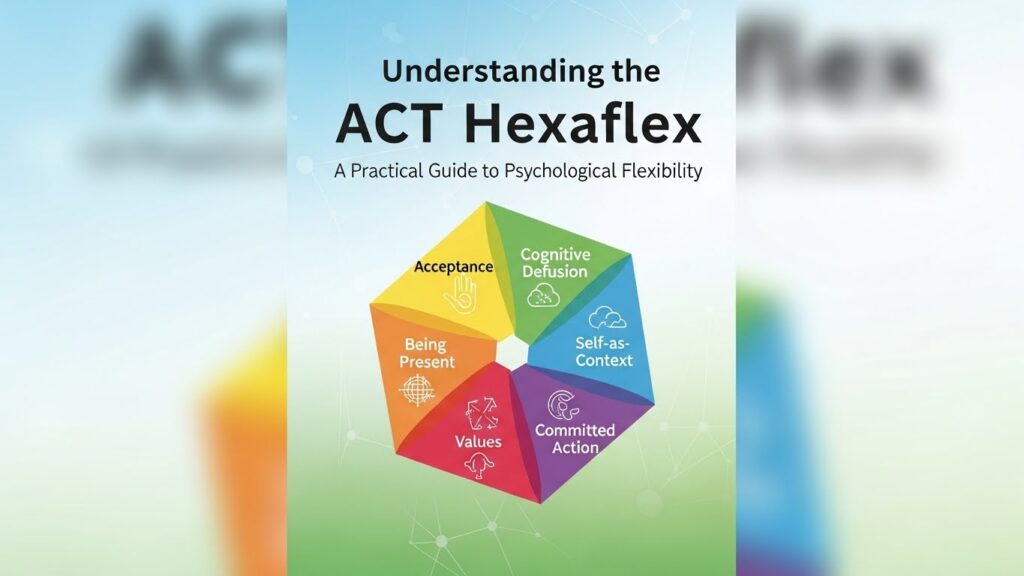
The ACT Hexaflex is a visual model made up of six interconnected processes. Together, they support psychological flexibility—the ability to stay present, open, and engaged in life, even when things feel difficult.
Each process works alongside the others, creating a balanced system. When one area improves, it often strengthens the rest, making personal growth more sustainable and realistic.
Acceptance: Making Space for Experience
Acceptance is about allowing thoughts and emotions to exist without fighting them. This doesn’t mean giving up or liking discomfort. Instead, it involves recognizing that avoiding or suppressing feelings often makes them stronger.
By learning to sit with difficult emotions, people reduce their power and free up energy to focus on what truly matters.
Cognitive Defusion: Stepping Back from Thoughts
Our minds constantly produce stories, judgments, and assumptions. Cognitive defusion helps create distance from these thoughts, so they are seen as mental events rather than absolute truths.
When people stop taking every thought literally, they gain freedom to choose actions based on values rather than fear or self-criticism.
Being Present: Engaging with the Now
Being present means fully experiencing the current moment instead of dwelling on the past or worrying about the future. This skill is closely connected to mindfulness.
When attention is anchored in the present, everyday experiences become clearer, calmer, and more meaningful—even during stressful situations.
Self as Context: More Than Your Story
Self as context encourages people to see themselves as the observer of their experiences, not the experiences themselves. Thoughts, emotions, and roles change over time, but the observing self remains stable.
This perspective builds resilience and reduces the tendency to define identity by pain, mistakes, or labels.
Values: Clarifying What Truly Matters
Values act as an internal compass. They represent what gives life meaning, such as connection, growth, honesty, or compassion.
Unlike goals, values are ongoing directions. Clarifying them helps people make choices that align with who they want to be, even when circumstances are challenging.
Committed Action: Moving Forward with Purpose
Committed action turns values into real-world behavior. It involves setting goals, taking steps forward, and adjusting when obstacles arise.
Progress doesn’t require perfection. Small, consistent actions aligned with personal values can create lasting change over time.
Why This Model Matters in Everyday Life
The ACT Hexaflex is widely used in therapy, coaching, and personal development because it reflects real human experience. Life is unpredictable, emotions are complex, and control is limited.
By focusing on flexibility rather than control, this approach helps people respond more effectively to stress, relationships, work challenges, and personal growth.
Final Thoughts
The ACT Hexaflex offers a compassionate and realistic way to navigate life’s ups and downs. Instead of trying to eliminate discomfort, it teaches how to live well alongside it.
By practicing acceptance, awareness, and value-driven action, people can build a richer, more meaningful life—one moment at a time.